
At Summerbrook Dental & Implants of Fort Worth, our goal is to help you achieve and maintain a beautiful, healthy, and confident, smile. Take your smile back, take your life back.
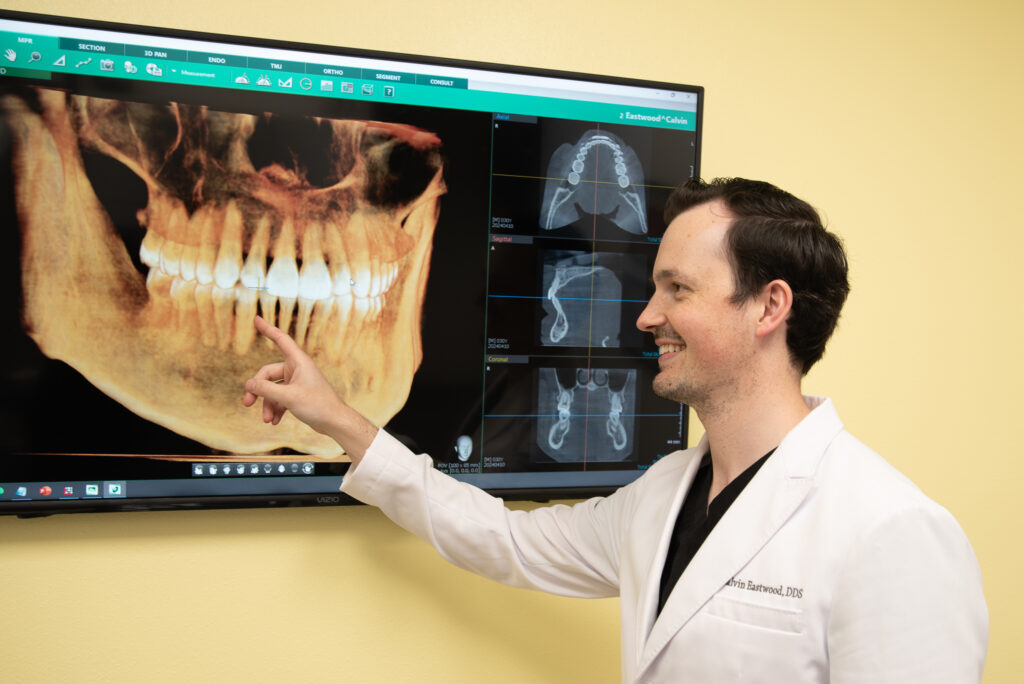
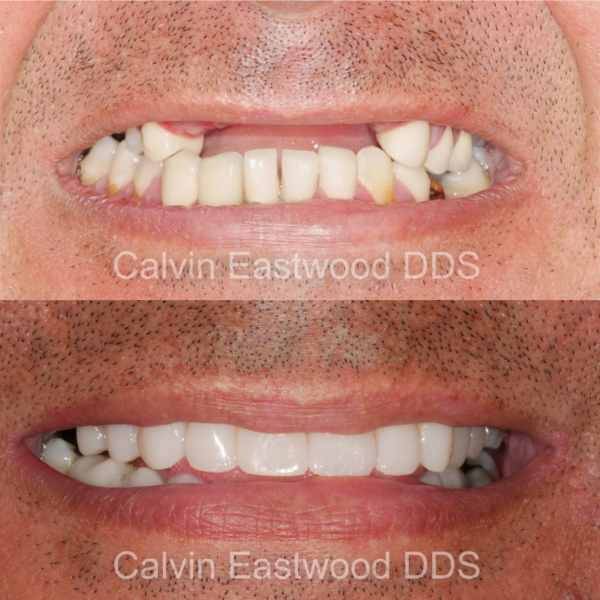
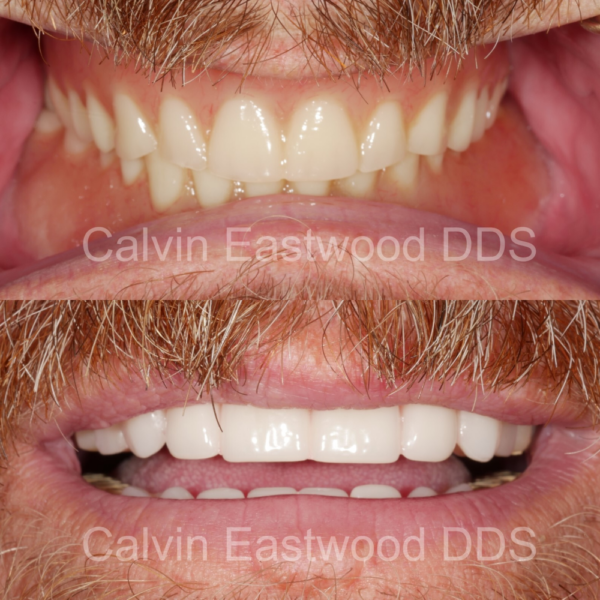
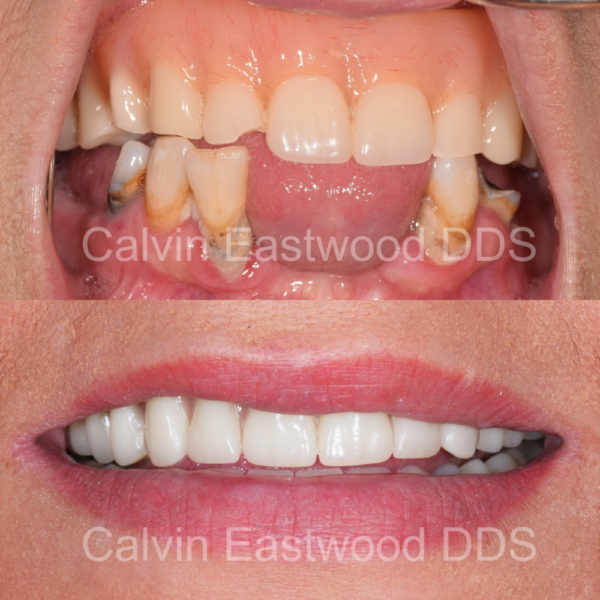
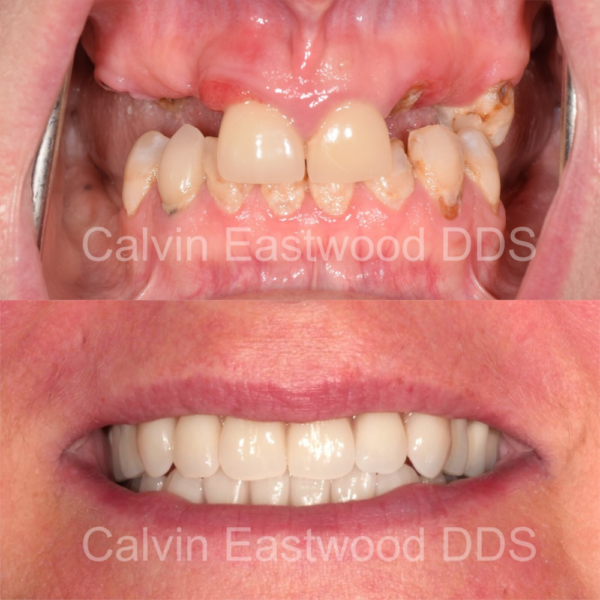
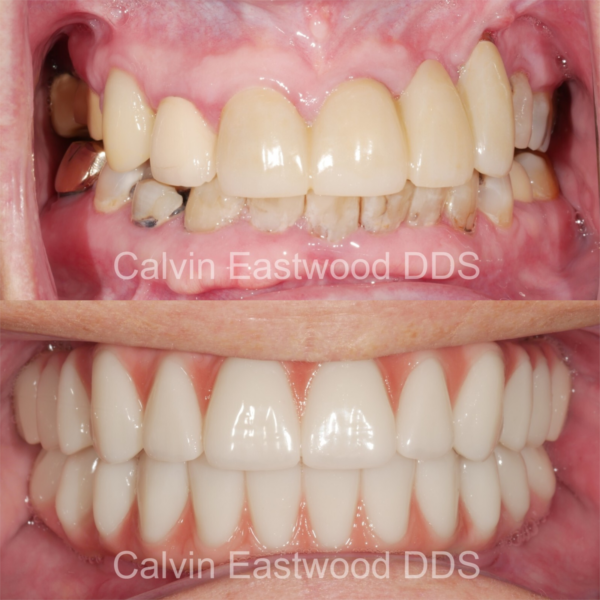
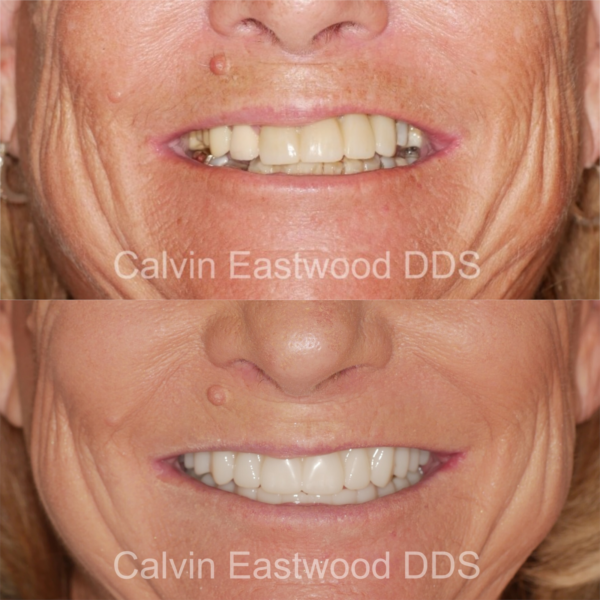
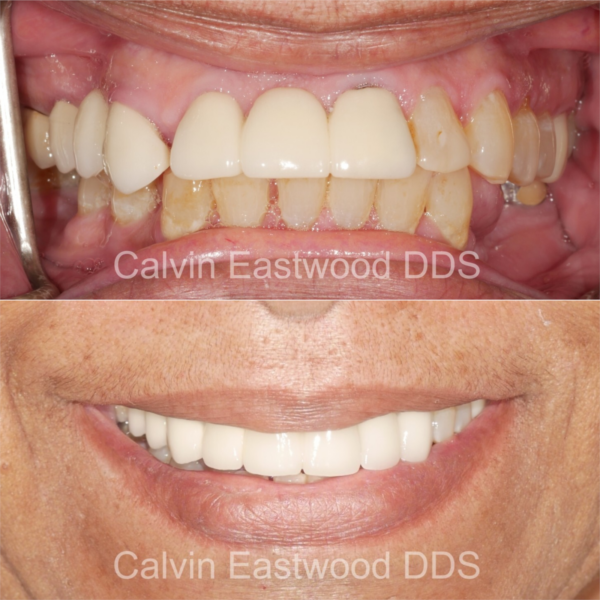
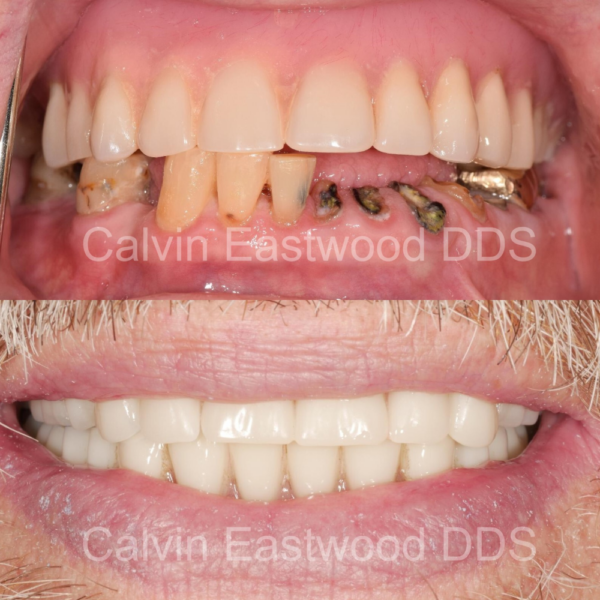
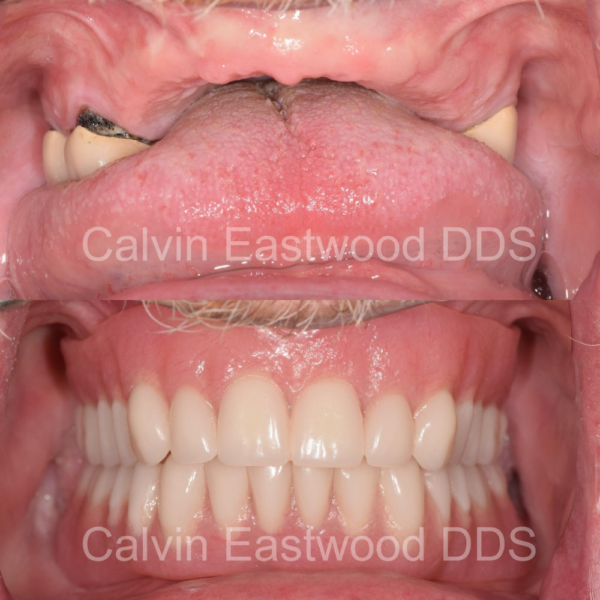
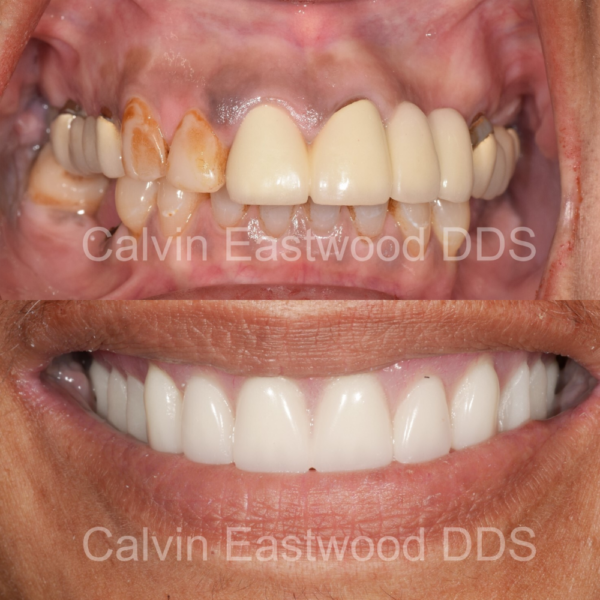
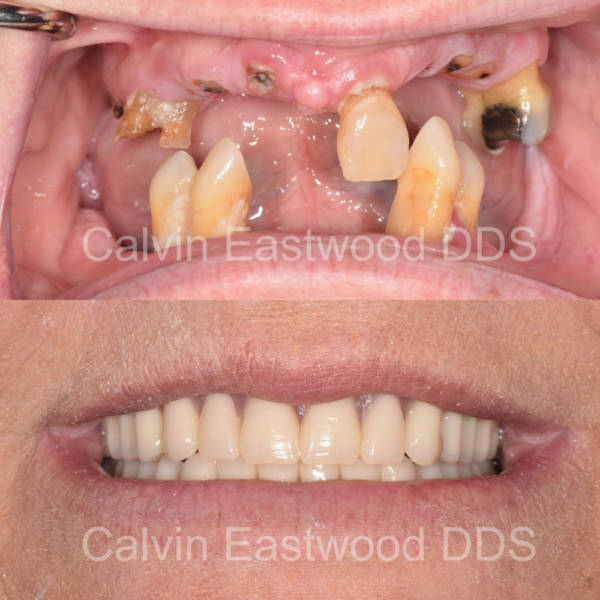
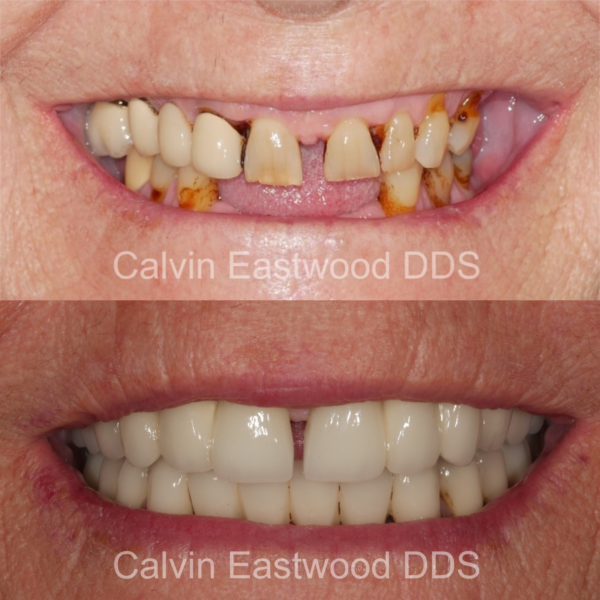
Our practice offers Straumann and Neodent implants to replace missing teeth, and our dental implant restorations are made of the highest quality zirconia, ultrapolished with a special protocol to allow tissue adhesion and prevent bacteria and plaque from sticking to them. Dr. Eastwood is highly trained and incorporates Zero Bone Loss concepts from European scientists in his dental implant procedures along with custom healing abutments to give you the longest lasting implants possible.
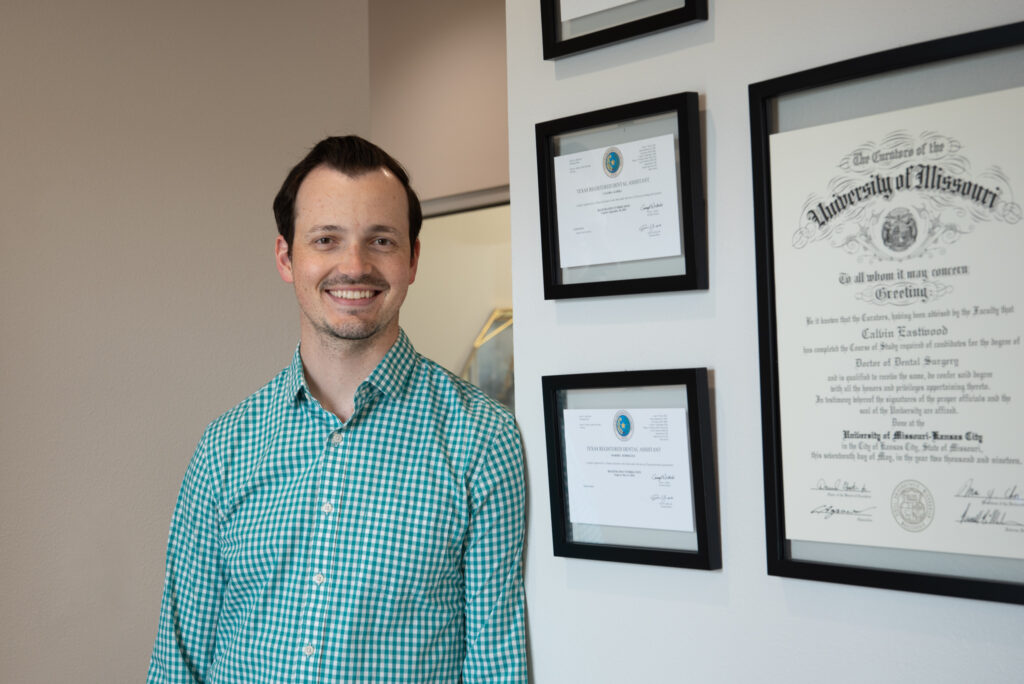
The people that come to see us about Dental Implants in Fort Worth fall into 2 categories.
First, we meet people who are tired of the dental services provided to them fixing multiple teeth over and over again, frustrated by gum disease that never seems to improve, and are dreading the thought of one day needing dentures. They tell us that even the IDEA of wearing dentures makes them feel OLD, and they can only imagine how much harder it is to eat and smile with giant hockey puck dentures in their mouths. They are tired of dental treatment constantly failing.
The second type of people that comes to see us are the ones who are ALREADY missing teeth and wearing dentures. They know what it’s like to try to eat and smile with loose fitting dentures, and are tired of the sore spots and denture glue. They just want to be able to smile, eat, and TASTE their food like a normal human again.
Well… no matter which category YOU fall into… we’ve got your back.
Fort Worth Dental Implant Options
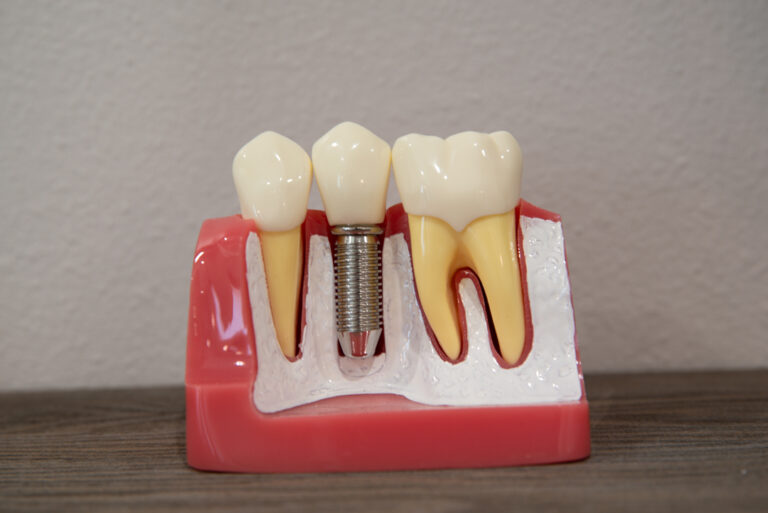
Single Tooth Dental Implant
Dental implant surgery including tooth placement all done at one office.
Dr. Eastwood is one of the few implant dentists in the Fort Worth, TX area with the advanced training and skill to remove broken or infected existing teeth and replace them with an implant along with any necessary bone or sinus grafting at the same appointment. This shortens the wait to replace a tooth from 6-9 months at other Fort Worth implant dentist offices to 3 months with Dr. Eastwood.
Same-Day Smile (All-on-4 Dental Implants)
Permanently fixed arch of teeth Same Day Smile (All-on-4 Dental Implants)
This is a permanent solution for replacing an arch of teeth. Maybe you’ve heard the terms “Teeth in a Day” or “Same Day Teeth®” – these all refer to the placement of 4-6 dental implants attached to a fixed dental bridge of teeth. This multiple implant protocol is truly revolutionary in that it allows for an entire mouth of teeth to be replaced in as little as one surgical procedure with IV sedation for a stress free experience all under one roof. You are able to eat your favorite foods with your new teeth without worry because the restored smile is resting on a stable foundation thanks to the dental implants.
Implant-Supported Snap-in Denture
Removable snap-in dentures are a cost effective option with greater chewing ability than regular dentures.
They still need to be removed to clean under them, and the snap part on the denture will tend to wear out and need to be replaced approximately every 1-2 years. The prosthetic teeth may wear over time as they are made of the same material as dentures.
Dr. Eastwood typically attaches the snaps to the denture the same day he places the implants, so they can be used right away, no waiting!
Did you know…
Ready to see if dental implants are right for you?
Call (817) 382-7445 to scheduleHave Questions About Implant Dentistry? Find Answers Here.
I'm terrified of the dentist - what can you do to help?
You’re not alone! All of the people we meet hate the dentist. Let’s face it – if they LOVED coming to the dental office, they wouldn’t have major tooth problems and wouldn’t need our help!
We have a variety of medication and sedation options that can help even the biggest chickens finally relax at the dentist. So now you can “turn back the clock” on years’ worth of dental problems in just one visit.
And we promise: NO Judgment and NO Lectures.
What if my tooth being removed is infected?
Dr. Eastwood has advanced training and utilizes advanced socket disinfection techniques so that he can predictably place implants into infected areas without any issues. Since he is able to remove the infection entirely and disinfect the area, the healing is improved significantly and many less post operative issues are seen.
Many dentists in Fort Worth without such training are not confident in totally removing all areas of infection, so they cannot confidently place dental implants into infected areas, and sometimes are even unable to place bone graft material. By having your procedure done by Dr Eastwood, he uses advanced disinfection protocols to make sure the area heals well and gives the best results possible.
What if I was told I don't have enough bone?
If you were told by another implant dentist in Fort Worth at a dental implant consultation that you don’t have enough bone, and that dental implants or All-On-4 won’t work for you… that MIGHT have been true, at that time and with that dentist’s level of experience. But using today’s technology we can fix almost ANYTHING in one location. Our secret is to find creative ways to use the bone you already have, so you can avoid bone grafting completely and the extra surgeries, discomfort, time, and cost that comes with it.
Based on how we do dental implants and All-On-4 at our practice, over 95% of people can get a full set of teeth supported by dental implants, without requiring any bone grafting.
How are dental implants made?
The implant and the titanium “post” are the two main parts of your dental implant. The titanium post is the implant that is placed into your jaw. It’s crafted out of titanium because this material has proven to be a sturdy foundation for your replacement teeth; these are pre-made to fit your mouth.
After your implant has been placed, Dr. Eastwood will take digital scans of your teeth and send them to a dental lab to create a restoration that will mold seamlessly into your jaw. The restoration is generally made out of zirconia (ceramic) material. The durability and realistic appearance of the crown will serve just as well as natural teeth.
How long do dental implants last?
A well-placed and well-maintained dental implant has a 90% chance of success after 20+ years – meaning you can chew with it, and it looks and feels like a regular tooth 20+ years after the date it was placed. The rate of success depends on the implant dentist’s skill (being well-placed) and the patient’s oral hygiene (being well-maintained). Our success rate at Summerbrook Dental & Implants is greater than 97%.
Can dental implants get infected?
Unfortunately, It’s possible for dental implants to become infected. “Peri-implantitis” is a rare condition where the implant becomes infected around the gums due to lack of proper care following the procedure.
Although this condition is rare, it’s important to carefully follow Dr. Eastwood instructions during your recovery. Keep up with good oral hygiene habits, like regular brushing and flossing, even after your dental implants have healed. By doing this, you won’t have to worry about an infection.
Will dental implants stop bone loss?
Dental implants are the only dental restoration that prevents bone loss. Bone loss occurs after losing a tooth. Because of this, your jaw is no longer stimulated by the tooth roots due to the tooth loss, causing your jaw bone to weaken from lack of use.
This is solved with dental implants because they bond directly to the jaw, serving as a sturdy root. The pressure of chewing and biting is transferred to the jaw, once again providing that much-needed movement to keep your bone from losing density.
Can dental implants be done in one day?
In many cases, dental implants can be completed in one day. But typically, these restorations will be a temporary prosthetic to protect the implant site and keep your bite functional until the permanent restoration. The temporary restoration is implemented so that you are able to eat and speak while the implant is permanently healing and bonding to your jaw.
While the implant is healing, Dr. Eastwood will schedule a series of follow-up visits. Dr. Eastwood will monitor the healing process which usually lasts about 3 months. During this time, Dr. Eastwood will take impressions so that your personalized restorations can be created. These permanent restorations will be placed once the implant is healed so that you can have the enduring smile you want.

Did you know…
For many patients, dental implants can last 15+ years
Ready to schedule a consultation?
Call (817) 382-7445 to scheduleMore Dental Implant Questions
What is a flipper tooth (dental flipper)?
A flipper is a lightweight, removable temporary denture — an acrylic false tooth on a gum-colored base — used to fill a gap while you heal from an extraction or wait for an implant. It restores your appearance quickly and inexpensively, and helps with speech and soft foods. It is not a long-term fix: it is fragile under bite pressure and, unlike an implant, does nothing to stop jawbone loss.
What is an eposteal implant?
An eposteal (subperiosteal) implant rests on top of the jawbone under the gums rather than being placed into the bone. It was used decades ago for patients without enough bone for a traditional implant. Because it sits on the bone instead of fusing into it, it is far less stable, and it is rarely used today — modern bone grafting and sinus lifts let most of those patients receive a standard endosteal implant instead.
What does “abutment” mean?
The abutment is the small connector between the implant post in your jaw and the crown, bridge, or denture on top. If the implant is the root and the crown is the tooth, the abutment is the link between them. Dr. Eastwood often uses custom zirconia abutments, which are tooth-colored, highly polished, and resist plaque — which keeps the gum tissue healthier than a stock part.
How much do implant dentures cost?
Snap-in (implant-retained) dentures that clip onto 2–4 implants run about $10,000–$15,000 per arch. Fixed implant dentures secured to 4–6 implants (All-on-4 / All-on-6) generally run $20,000–$30,000 per arch. Bone grafting, a sinus lift, or extractions add to that. For single-tooth pricing and a full component-by-component breakdown, see our 2026 Fort Worth implant cost guide.
How much do snap-in dentures cost?
Snap-in dentures typically cost $10,000–$15,000 per arch, or roughly $20,000–$30,000 if both arches are treated. The range depends on how many implants are needed and whether extractions or grafting are required first. See our financing and insurance guide for monthly payment options.
What are mini implants?
Mini implants are narrower than standard implants — closer to a toothpick than a pencil — and are used mainly to stabilize a lower denture when there is not enough bone for full-size implants. They often need less surgery and can sometimes support a denture the same day. They are not as strong or as long-lasting as full-size implants, so for a permanent fixed set of teeth, standard implants are usually the better choice.
How do snap-on dentures work?
Small implants placed in the jaw act as anchors, and the denture snaps onto them instead of resting loose on the gums. Dr. Eastwood offers these for the lower jaw, where conventional dentures slip the most. He does not recommend upper snap-in dentures — the shape of the upper jaw already gives a conventional denture good retention, and the implant-retained versions tend not to hold up.
What are screwless dental implants?
Screwless (cement-retained) implants bond the crown to a custom abutment with high-strength dental cement instead of a screw. That removes the screw access hole through the top of the crown, so the result looks more natural and the gum contours can be shaped more precisely. The trade-off is that removing the crown later is harder than with a screw-retained design, so planning has to be exact.
What are the newest types of dentures?
The biggest advances are implant-supported dentures that snap onto 2–6 implants, hybrid (fixed) dentures that are permanently attached and do not cover the roof of the mouth, and palate-free upper dentures. Materials have improved too — modern acrylics and zirconia resist wear and staining far better than older denture materials. All of these protect the jawbone from shrinking, which conventional dentures do not.
Can dental implants cause smelly discharge?
The implant itself does not create odor, but a bad smell, bad taste, or pus around an implant usually signals peri-implantitis — a bacterial infection of the gum and bone around the implant. Other signs are swelling, redness, and bleeding. Caught early it is usually treated with deep cleaning around the implant, antibiotics, or adjusting the crown; advanced cases may need gum surgery or grafting. Do not wait it out — untreated, it can destroy the bone holding the implant.
How do I know if I am allergic to my implants?
True implant allergies are rare — titanium and zirconia are both highly biocompatible. Signs worth investigating include persistent pain, swelling, burning, gum irritation, a metallic taste, or an implant that loosens after it should have healed. Those symptoms far more often mean infection, so do not assume allergy: the next step is an exam and, if warranted, patch or allergy testing. If a metal sensitivity is confirmed, a ceramic (zirconia) implant is usually a workable alternative.
Can dental implants cause autoimmune disease?
Current scientific evidence does not show a link between dental implants and autoimmune disease. Implants are made of titanium or ceramic, both biocompatible and used in millions of patients. A small number of people have a metal sensitivity that can cause local inflammation around the implant — for those patients zirconia is an option. If you have an autoimmune condition, Dr. Eastwood reviews your history and, when appropriate, coordinates with your physician before treating.
How many appointments do dental implants take?
Usually four stages: a consultation with X-rays or a 3D scan; the implant placement itself (about an hour for a single implant); a 3–6 month healing period with one or two quick checks; then the abutment and crown visits, which are sometimes combined. Extra steps like bone grafting add appointments.
Why would a dentist not recommend an implant?
The three usual reasons are insufficient jawbone (often fixable with a bone graft or sinus lift), health factors that impair healing — uncontrolled diabetes, cancer treatment, immune conditions, smoking — and active gum disease or inconsistent home care. In most of these cases the answer is “not yet” rather than “never”: treat the underlying problem first, then reassess.
Is it worth getting dental implants at 70?
Yes. Age by itself is not a disqualifier, and many of Dr. Eastwood’s implant patients are in their 70s. What matters is general health and bone volume, not birth year — and well-managed conditions like diabetes or high blood pressure usually do not rule implants out. Where bone has shrunk, grafting or a sinus lift can rebuild it.
Do I have to go without teeth while waiting for implants?
In most cases, no. During the months of osseointegration we provide temporary teeth — a temporary crown, bridge, or denture — so you can talk, eat soft foods, and smile normally. In some cases same-day temporary crowns can be attached to the implants immediately after surgery.
Are dental implants painful?
Most patients say it was easier than expected. The area is fully numbed with local anesthetic, so you feel pressure rather than pain, and oral or IV sedation is available if you are anxious. Afterward expect mild soreness and swelling for a day or two — similar to a simple extraction — with most people back to normal activity within 24–48 hours. The months of bone healing that follow are generally not painful.
What is the healing process for implants?
The first few days bring mild swelling, tenderness, and sometimes slight bruising, managed with soft foods, gentle cleaning, and medication as needed; most patients feel much better within a week. Over the next 3–6 months the bone grows around the implant (osseointegration). Once it is fully integrated, the final crown, bridge, or denture is attached.
Related reading: implant cost guide · paying for implants · sinus lift guide